
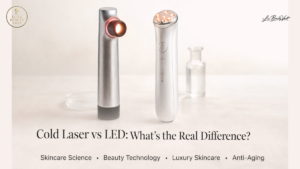
Luxury skincare devices are everywhere right now — especially LED masks and cold laser tools — but the science behind them is often misunderstood. While both use light-based technology, they work very differently on the skin, and the results depend more on biology and consistency than hype or price.
Here’s a clear, practical breakdown of what each technology actually does.
Understanding cold laser vs LED skincare devices helps explain why results vary so widely across users. Modern luxury skincare devices rely on different forms of light-based beauty technology skincare, with LED light therapy skincare working on surface-level concerns while cold laser skin treatment penetrates deeper to support cellular repair. These advanced skincare devices can enhance skin health when used consistently, but their effectiveness still depends on skin barrier stability, daily protection, and long-term routine habits rather than technology alone.
What LED Devices Really Do
LED (Light Emitting Diode) devices use low-energy visible light — most commonly red, blue, or near-infrared wavelengths.
How LED works:
- Red light supports collagen signaling
- Blue light targets acne-causing bacteria
- Near-infrared helps calm inflammation
What LED is good for:
- Overall skin tone improvement
- Mild anti-aging support
- Acne management
- Maintenance and prevention
LED light works on the surface and upper layers of the skin, making it gentle and widely accessible. Results are gradual and depend heavily on regular use.
Limitations:
- Limited penetration depth
- Subtle changes rather than dramatic transformation
- Results can plateau if expectations are too high
What Cold Laser Devices Actually Do
Cold laser (also called low-level laser therapy) uses coherent, focused light, which behaves differently from LED.
How cold laser works:
- Light penetrates deeper into the dermis
- Stimulates cellular activity at a mitochondrial level
- Supports collagen production and tissue repair
What cold laser is good for:
- Skin firmness and elasticity
- Wrinkle softening
- Texture refinement
- Post-inflammatory redness
Cold laser devices are typically more expensive because of engineering complexity, safety controls, and clinical-grade standards.
Limitations:
- Requires strict consistency
- Not a replacement for skincare fundamentals
- Overuse or improper use can stress the skin barrier
Why Results Vary So Much
The biggest misconception is that stronger technology automatically means better results. In reality, outcomes depend on:
- Skin barrier health
- Baseline skin condition
- Product compatibility
- Usage frequency
- Sun protection habits
Even the most advanced device won’t compensate for a compromised skin barrier, dehydration, or inconsistent care.
The Missing Piece: Skin Stability
Both LED and cold laser devices perform best when paired with:
- A well-maintained skin barrier
- Balanced pH skincare
- Daily sunscreen
- Minimal irritation
Devices should support skin health — not replace it.
So… Which One Is “Better”?
There’s no universal winner.
- LED is ideal for beginners, maintenance, and sensitive skin
- Cold laser is suited for advanced users focused on firmness and texture
Luxury skincare devices are tools — not shortcuts. Their value comes from how intelligently they’re used, not just their price tag.
Final Thought
Healthy, youthful skin isn’t created by chasing the most powerful technology. It’s built through consistency, barrier protection, and understanding how your skin responds over time.
Technology can enhance results — but stability is what sustains them.
science-backed skincare technology
Luxury Skincare Ingredients That Actually Work (Science-Backed Guide)